Fume Hood Certification
For over 25 years, BalCon’s Lab Safety Services Team has been ensuring the safety of people, equipment, and lab environments. By exceeding all national standards, our Lab Safety group is the leader in comprehensive testing, certification and service.
Our expert service team provides fast on-site repairs for all of your lab equipment. We can service a wide range of equipment and brands, providing you solutions that allow you to better plan for the future.

Annual Inspections and Maintenance
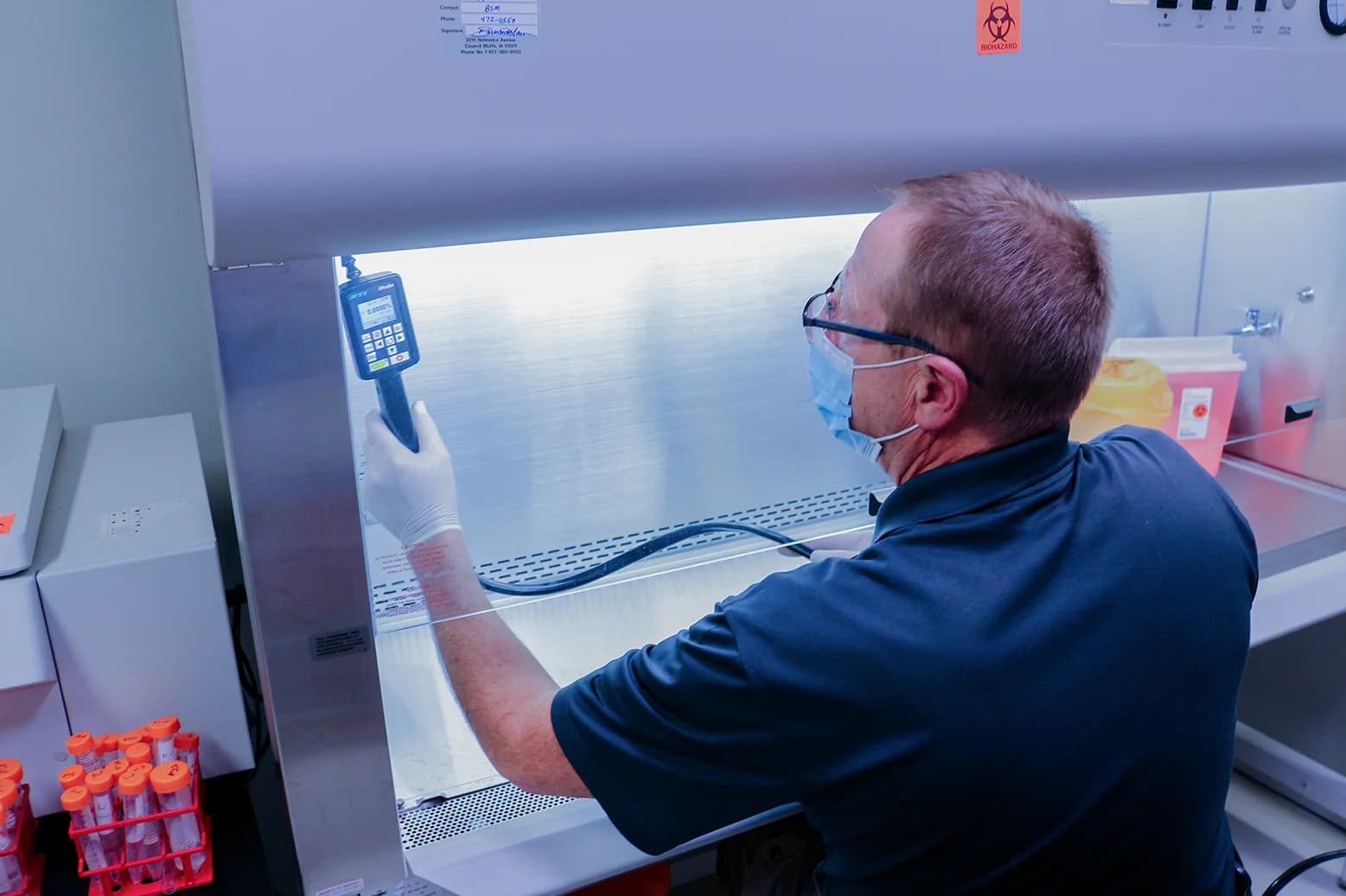
Our Lab Safety team performs annual inspections, routine maintenance, service, and repair on all fume hood classes. Using airflow monitoring equipment our certified experts can ensure the safety and efficiency of your lab. Whether it’s problems with baffles, blowers, air loss, filtration, or controls, we have a fix. Fume Hood Certifications should be certified at least once per year to ensure they are running with correct airflow levels and airflow patterns.
- High/Low Flow Alarm Testing and Calibration
- Internal Pressure Monitoring
- Hood Face Velocity Testing
- Visualized Air Flow Testing (Smoke Testing)
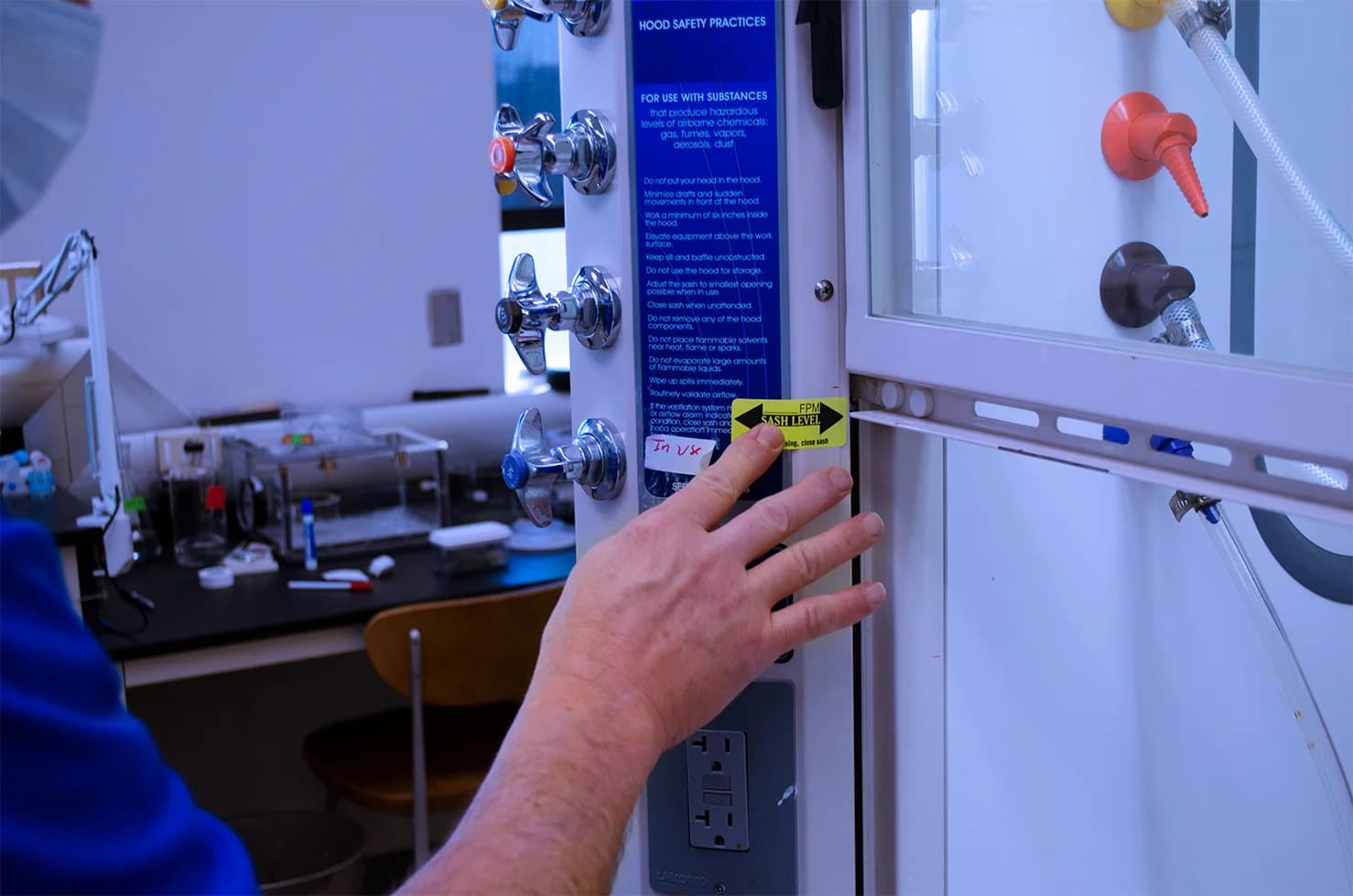
- SASH Inspection
- Critical Controls Verification
- Fume Hood Installations
- Laboratory Relocations and Renovations
- 24/7 Emergency Response Services
ASHRAE 110 Fume Hood Tests
ASHRAE 110 is the preferred method for testing the performance of laboratory fume hoods. It is important to note, that this certification does not directly affect safety. Instead, this standard gives guidelines to meet when performing quantitative tests for fume hoods.
- As Manufactured (AM): The fume hood is built, assembled, and tested by the manufacturer at their facility.
- As Installed (AI): The fume hood is installed at the location of the customer. The ventilation system is tested and balanced with no fumes in the fume hood’s final location.
- As Used (AU): The fume hood is tested and balanced after it has been in use by the customer.
ASHRAE 110 Fume Hood Certifications
Inflow Face Velocity Profiling
This test ensures the hood can contain fumes without causing turbulence between the face of the hood and the operator.
Schedule ServiceTracer Gas Containments
Using a dispersion device, we release a tracer gas like sulfur hexafluoride inside the fume hood. The performance of the hood is determined by measuring the concentration of the tracer gas in the breathing zone.
Schedule ServiceCross-Draft Testing
A fume hood’s effectiveness is dependent on the environment of the fume hood. If there are drafts in this space, they can create turbulent air pockets and draw the contaminants from the hoods. Cross-draft testing mitigates this risk.
Schedule ServiceAirflow Smoke Pattern Testing
This is the final test in the certification process. The test certifies unidirectional airflow of the hood to the High Efficiency Particulate Air (HEPA) filters.
Schedule ServiceVariable Air Volume (VAV) Response Testing
Some fume hoods come equipped with VAV systems designed to modulate air flow to a minimum when the sash is closed or unoccupied. Special airflow tests are required to evaluate proper operation of the VAV’s flow control systems.
Schedule ServiceSash Motion Effect (SME) Test
The performance of the fume hood is measured by the maximum positional sash movements over a period of time.
Schedule Service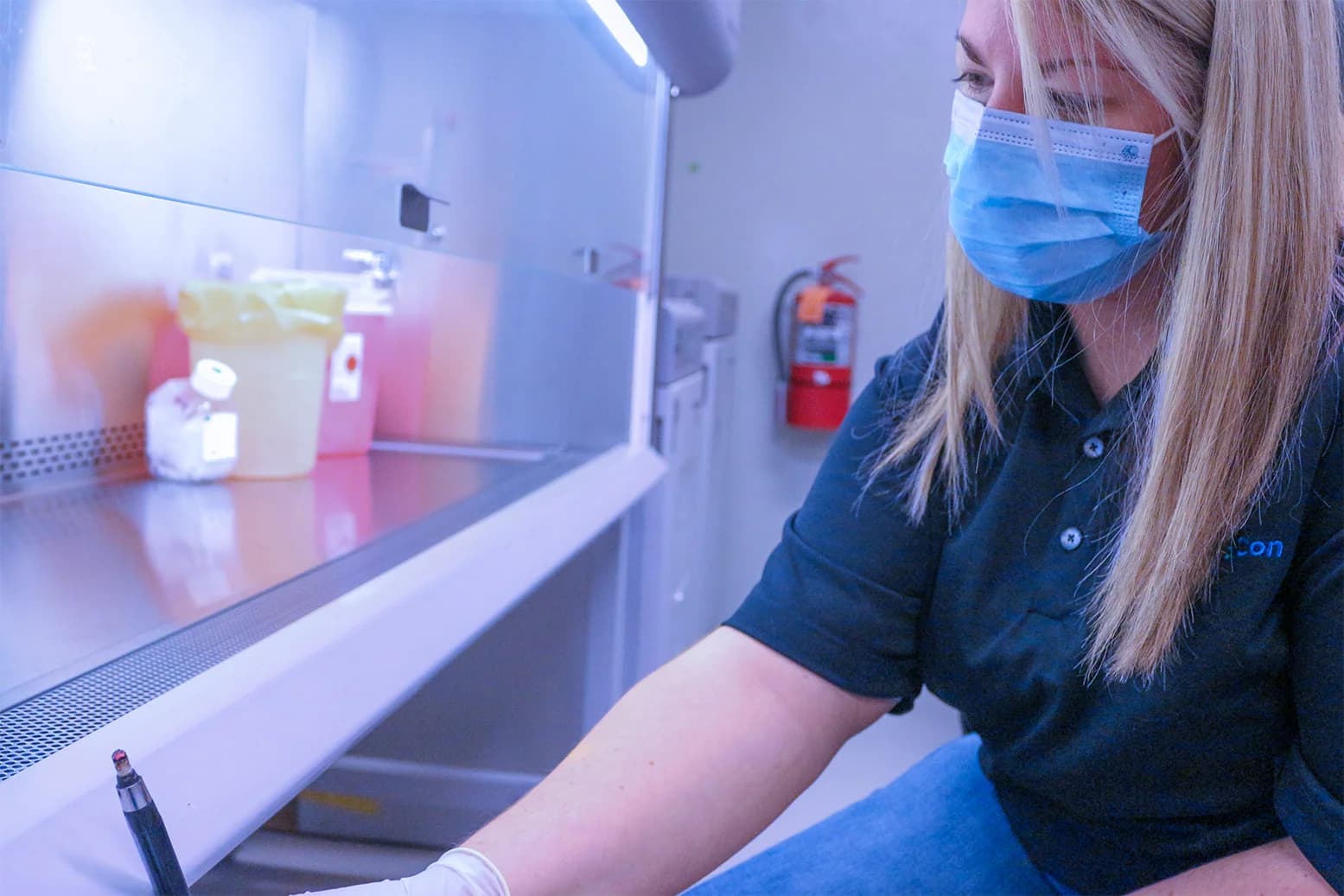
Understanding Face Velocity vs Visual Testing
Face Velocity Testing is the average amount of air that is pulled through the chemical hood. If these velocities are too low then chemical fumes will escape the hood into the lab. If the velocities are too high, energy costs will be high as you exhaust large amounts of conditioned air from the room. A traditional hood should be between 80 and 100 FPM according to many agencies. This may increase to 120 if you’re working with highly toxic chemicals.
While face velocity tests can determine airflow rates, smoke testing is the final authority on whether your hood is functioning appropriately. This is because diffusers and room pressure as well as a number of other factors can affect the containment in a fume hood. That is also why a smoke test is the final step in the certification process.