Biological Safety Cabinet Certification
For over 25 years, BalCon’s Lab Safety Services team has been ensuring the safety of people, equipment, and lab environments. By exceeding all national standards, our Biological Safety Cabinet certification team is the leader in comprehensive testing, certification, and service.
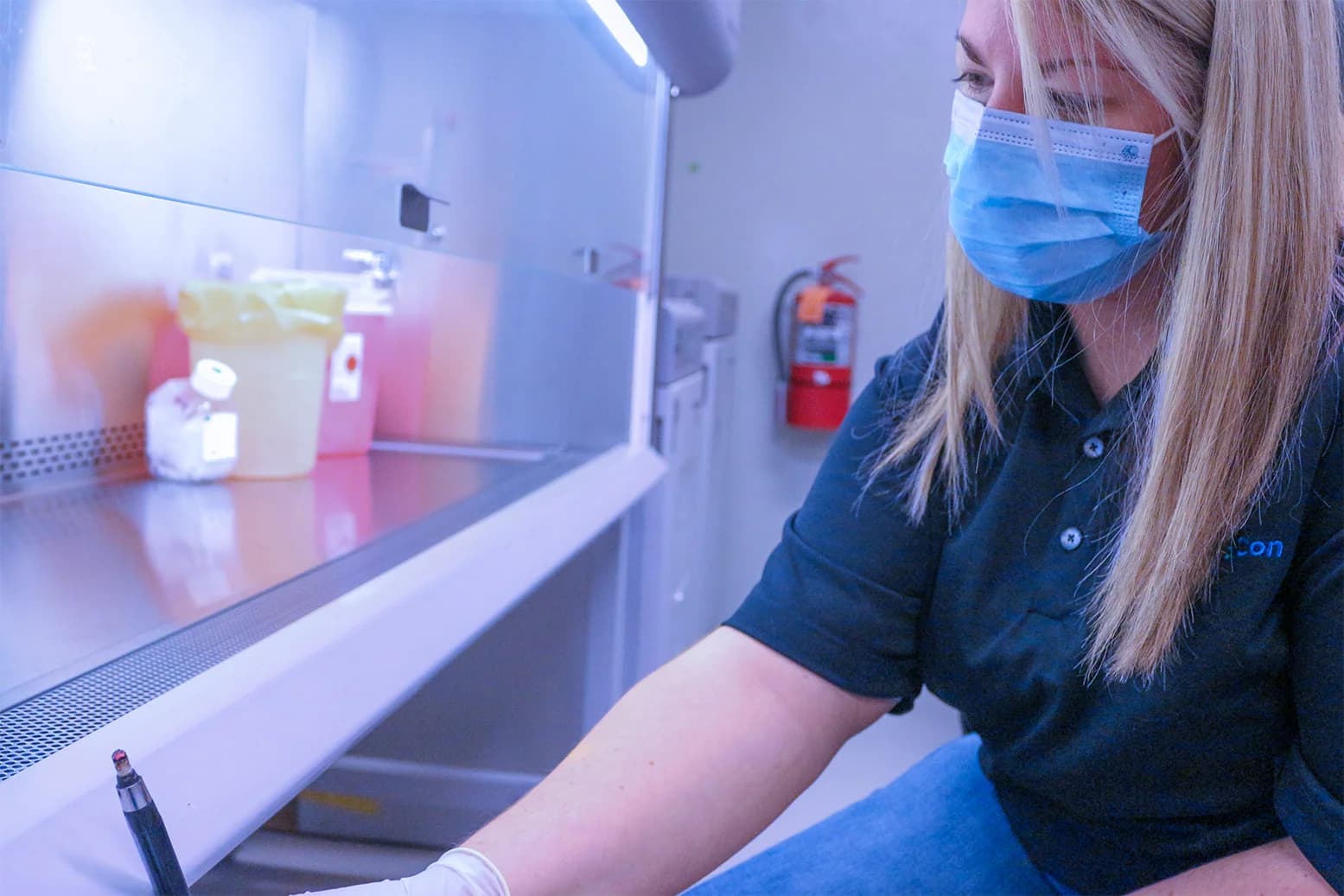
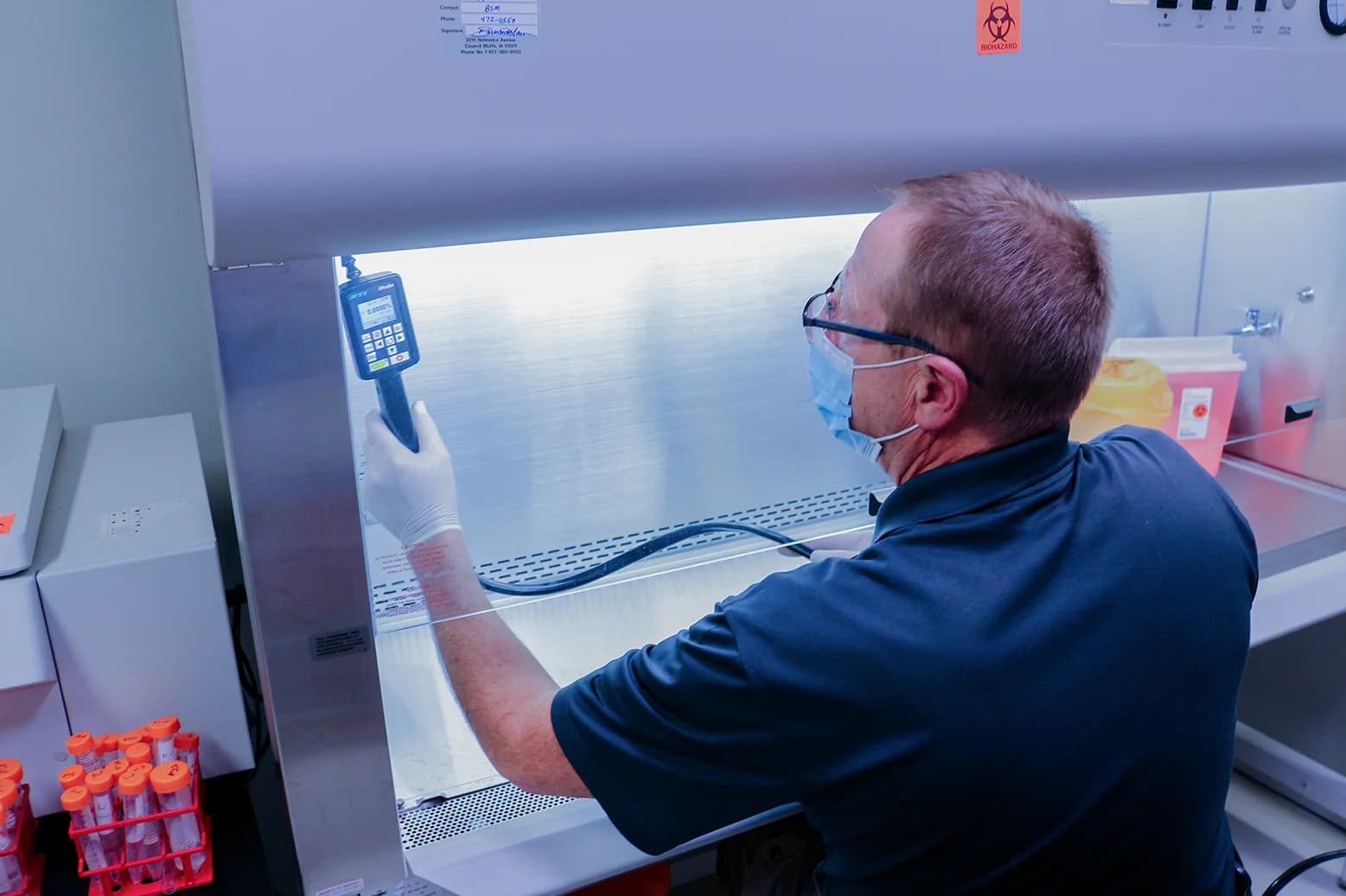
Biological Safety Cabinet Certification Tests
Let our team of experts keep your lab safe by becoming your Biological Safety Cabinet Service Provider. Our services include testing, certification, emergency repair and maintenance.
Following your certification, you will receive a full report for each test performed on your Biological Safety Cabinet. Our Certification Tests include:
- Inflow Velocity Measurements
- Down-Flow Velocity Measurements
- HEPA Filter Integrity Testing
- Smoke Pattern Testing
- Alarm Calibration
- Site Installation
NSF Certified
Specialized knowledge is needed to certify, service and repair biological safety cabinets (BSC). That is why NSF keeps a listing of qualified individuals. These are people who have successfully completed both written and practical examinations. This proves the ability to perform the tests listed in annex F of NSF/ANSI 49.
Our Certifications
Accutrol Controls
Aircuity Controls

Antect Controls

Phoenix Controls
NSF Accredited Biosafety Cabinet Certifiers
NEBB Quality Certified
ASHRAE 110 Certifications

BSL-3 Certification
Frequently Asked Questions
Biological safety cabinets should be certified when installed and then certified at least once every year according to OSHA. NSF International also recommends no more than 1 year between certification, as published in NSF/ANSI Standard 49.
Some pharmaceutical BSCs must be certified every 6 months per USP 797 and USP 800.
Note: If a BSC is moved for any reason, it must be re-certified before it has been put back into operation.
It is important to routinely deep clean your BSC using a disinfectant solution, commonly Isopropyl alcohol and deionized water. Clean all interior surfaces in this order: Ceiling, Front Wall, Back Wall, Left Wall, Right Wall, Work Surface.
Be sure to get all hard-to-reach places and use a swab if necessary. If a drain pan is in use it should be emptied into a suitable container.
Then clean the exterior of the unit using non-sterile isopropyl alcohol solution, starting at the top and working your way to the bottom.
There are 3 classes of BSC as classified by the US CDC. Class 1 cabinets are used for lower risk contaminants and do not offer product protection.
Class 2 cabinets are divided into four subtypes: A1, A2, B1 and B2. With each subtype the minimum inflow velocity and exhaust method differs. Class II cabinets offer the product protection that Class 1 cabinets do not.
Class 3 cabinets are used for high risk contaminants and offer the most protection. These cabinets are gas tight and are commonly referred to as glove boxes.
Air monitoring systems can measure air quality through duct probes, wall mounted sensors and ceiling mounted sensors. These systems can also generally integrate with existing building controls to measure contaminants in the air. Airflow rates can then be adjusted based on the results.