Test It Before You Close It: Why Underground Plenum Leakage Testing Matters
By BalCon Team
Test It Before You Close It: Why Underground Plenum Leakage Testing Matters
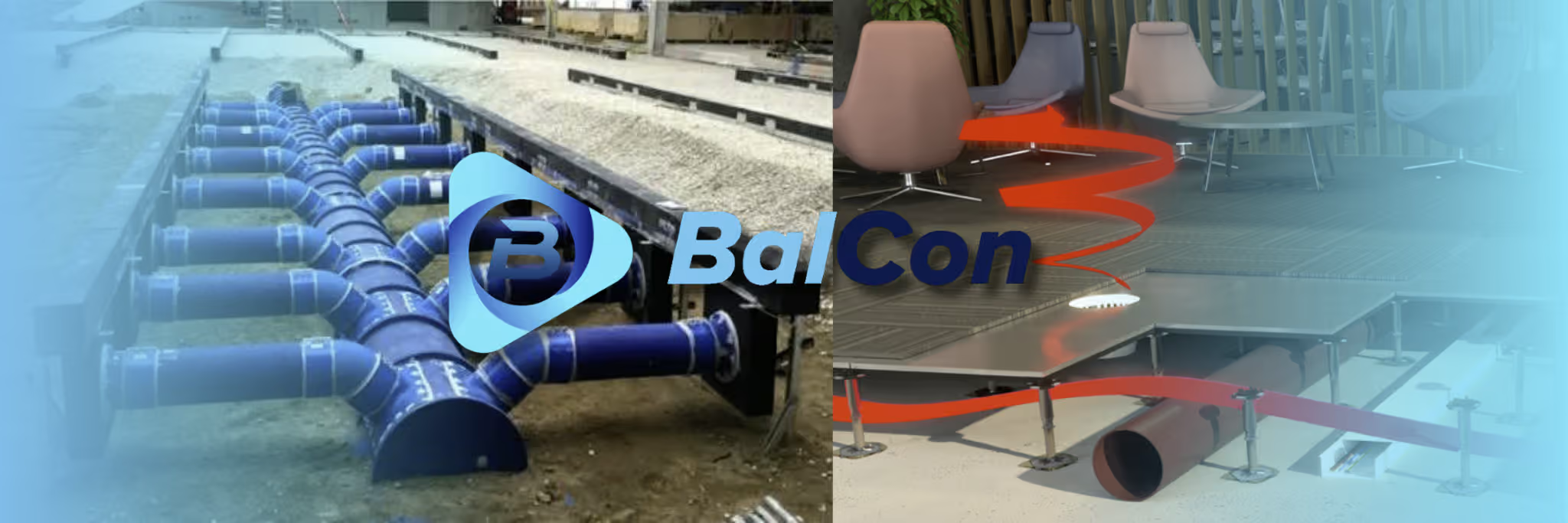
An underground air plenum is one of the most difficult HVAC components to repair once construction advances. Whether it’s beneath a slab, below a structural floor, or enclosed within a foundation system, leaks that are discovered late can mean demolition, delays, and costly rework.
An underground plenum is a below-grade, enclosed air pathway used to distribute conditioned air. Unlike ductwork that remains accessible, these systems become part of the building structure once enclosed. Every joint, penetration, sleeve, and connection becomes a potential leak point—and access disappears as construction progresses.
Why Finding Leakage Matters
Air that leaks from the plenum is conditioned air that never reaches the occupied space. That leads to:
· Reduced airflow at terminals
· Higher fan energy use
· Temperature and pressure imbalance
· Longer TAB and commissioning effort
The real issue is timing. Leaks that are inexpensive to fix early become expensive or destructive to repair once the system is enclosed.
How the Test Works
The plenum is temporarily sealed and pressurized using a calibrated test fan. Instruments measure how much airflow is required to maintain a set pressure. If leakage exceeds project criteria, leaks are located, repaired, and retested until the system meets specification.
Why Engineers and GCs Specify It
Engineers rely on predictable system performance assumptions. Excess leakage increases required fan energy and reduces delivered airflow, impacting comfort and control. For general contractors, the value is risk reduction—avoiding rework, delays, failed commissioning, and post-occupancy complaints. In short: it’s much cheaper to fix a leak before the system disappears.
The Bottom Line
Underground plenum leakage testing is about verifying performance before access is lost. It confirms the system is tight enough to perform as designed, giving engineers confidence in their airflow model and contractors confidence the installation won’t come back as a problem later.