How To Read A Balancing Report
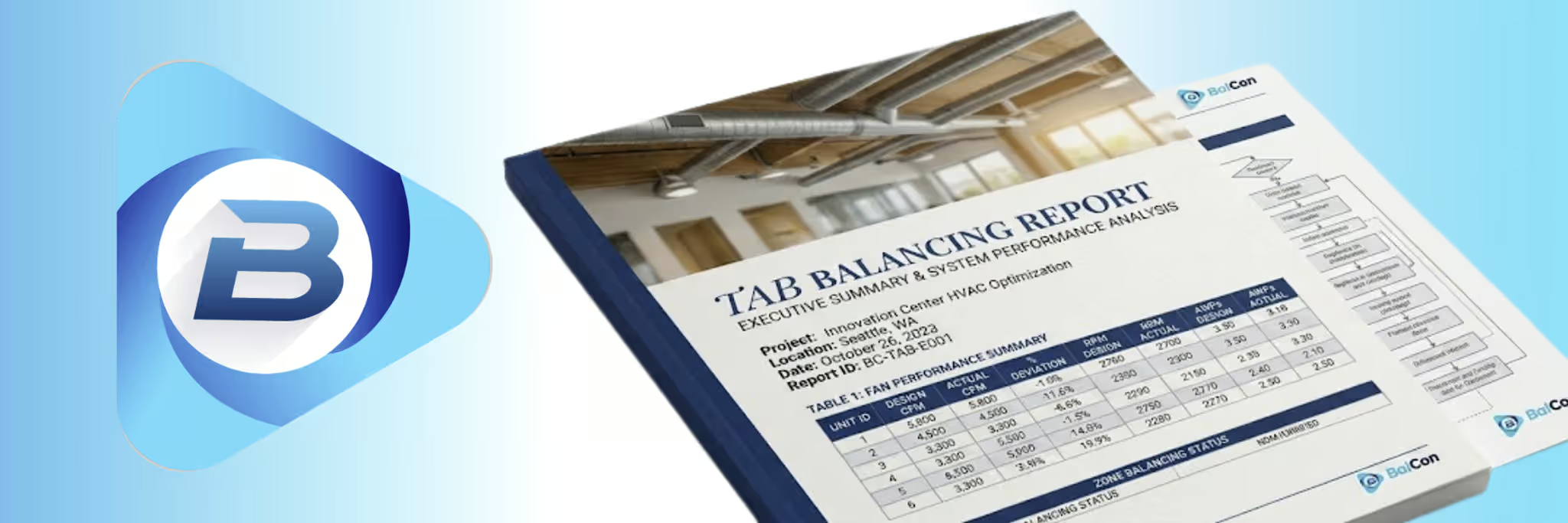
A certified TAB report compares what was measured against what was designed — fan and pump readings, airflows at every diffuser, water flows at every coil. Each number should trace back to a test instrument with a calibration date within the last 12 months. If the calibration page is missing, question the rest.
The pass/fail rules are simple:
Item | Typical tolerance |
Fan airflow | Within ±10% of design |
Water flow | Within ±10% of design |
Anything outside those numbers should show up on the deficiency list.
Read The Deficiency List First
A good report doesn't hide problems. It lists what missed design, why, and what was done about it. Anything the balancer couldn't fix in the field gets sent to the engineer of record.
Two things to remember. A deficiency that's written down and resolved is a closed item — an undocumented one is a future callback. And a complicated job that reports zero deficiencies deserves more suspicion, not less.
The list also tells you who owns each fix: a balancing problem, an installation problem, or a design problem. That distinction decides who pays.
Check The Fan Setpoint
On VAV systems, the static pressure setpoint should sit just 5–10% above what the farthest-away terminal needs. A setpoint much higher than that means the ductwork doesn't match the drawings — and it means wasted fan energy every hour the building runs.
Look At The Air-Handler Temperatures
Outdoor, return, and mixed-air temperatures are the most skipped lines in the report — and the most useful. They show whether the outdoor-air damper and economizer are actually working. If the mixed-air temperature sits almost on top of the return-air temperature, the outdoor damper is barely open — a fresh-air and code problem. Field studies put economizer failure at 60–80% of units, so this quick check is the cheapest audit in the document.
Note The Day's Conditions
The report records the weather and operating mode during testing. A reading taken on a mild spring day at partial load doesn't tell you much about a system struggling in July. When you compare against the report later, compare like against like.
Keep It Findable
This report is your building's baseline. Every future comfort complaint, energy question, or warranty dispute becomes a comparison instead of a mystery — but only if you can find it. Put it in the digital O&M library, not a binder in the mechanical room.