Autoflows vs. Circuit Setters: The Choice That Decides Balancing Costs
By BalCon Team
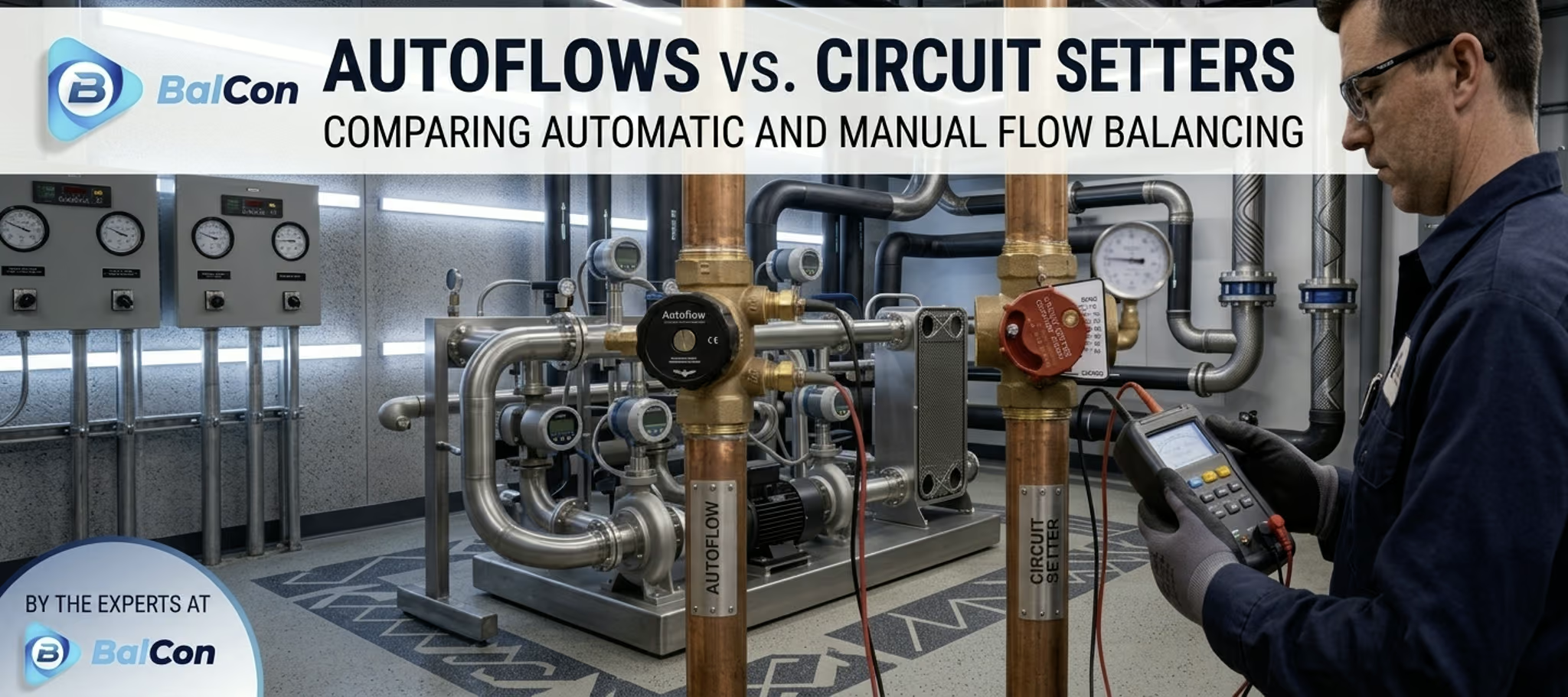
Autoflows vs. Circuit Setters: The Choice That Decides Balancing Costs
The balancing valve you specify doesn’t just affect system performance—it determines where the cost shows up: in the equipment or in the labor required to make the system work.
On hydronic systems, that decision typically comes down to manual balancing valves (often called circuit setters, a Bell & Gossett trade name that stuck) versus automatic flow-limiting valves, commonly referred to as Autoflows.
Why Flow Accuracy Matters
Hydronic coils are very forgiving of small flow variation and very unforgiving of wasted flow. As noted in the ASHRAE Handbook, increasing flow through a coil produces diminishing returns—roughly 6% more heat transfer for a 100% increase in flow.
At the same time, overflow is almost entirely wasted energy. In fact, doubling coil flow can quadruple pressure drop and increase pump power demand by roughly eight times. That imbalance is why systems are designed to stay close to design flow: underflow reduces capacity, and overflow quickly turns into unnecessary pumping energy.
How The Two Valve Types Work
A circuit setter is a manual, pressure-dependent balancing valve. It includes pressure ports so a technician can measure differential pressure and use a chart to infer flow. The valve is then throttled until design flow is achieved. The key limitation is that flow changes when system pressure changes, meaning the valve is only “correct” under the conditions it was balanced.
An automatic flow-limiting valve uses an internal spring or cartridge assembly to regulate flow mechanically. Once installed within its operating pressure range, it maintains a near-constant flow—typically within about ±5% of design—without requiring iterative adjustment. In other words, it reacts to pressure changes instead of relying on them being stable.
Where The Cost Actually Shows Up
Manual balancing is inherently iterative. Adjusting one valve changes system pressure, which affects every other valve in the system—including the ones already set. Larger systems often require multiple balancing passes before flows stabilize.
With automatic valves, field work is largely reduced to verification: confirm flow through the ports, confirm pressure is within the rated range, and move on. In practice, this can reduce installation and TAB time from repeated adjustments to a quick check per terminal.
While material cost is higher for automatic valves, published manufacturer comparisons show that when balancing labor is included, total installed cost can converge or even favor automatic solutions on larger systems. The reason is simple: fewer adjustment cycles, fewer revisits, and less dependence on system-wide rebalancing after each change.
Where Each Approach Fits
Manual circuit setters still have a place. They are simple, inexpensive, and reliable in stable constant-flow systems where operating conditions do not change significantly over time.
Automatic flow valves perform better in systems with diversity, variable flow, and frequent load changes—especially where long-term stability and reduced commissioning effort are priorities.
The Practical Takeaway
The real decision isn’t just valve type—it’s where you want the effort to land. Manual valves shift cost into field balancing labor and future adjustment. Automatic valves shift cost into upfront materials but reduce iterative balancing and long-term variability.
On larger hydronic systems, that trade often shows up more in TAB hours than in the equipment line item.